Network Device Monitoring Troubleshooting
- What to do when the device creation verification fails
- What do when the collector frequency is too aggressive.
What you are going to learn:
Device Creation Verification Failures 
When a network device is added with the Device Creation wizard, or when Recheck Connection is clicked in the Device Settings, the Collector Agent runs a few tests to validate the connection with the device. Here is what to check when a test fails.
Can't connect to the device (ICMP)
The Collector Agent was not able to ping the device. Check that:
- The IP address or hostname is correct.
- The device is online and accessible from the selected Collector Agent.
- ICMP is not blocked between the Collector Agent and the device (firewall, ACL, or device configuration).
Some devices block ping (ICMP). In that case, you can continue the setup with Continue Anyway: SNMP communication may still work.
SNMP Port Blocked (UDP 161)
The device is reachable, but the SNMP port is not open. Check that:
- SNMP is enabled on the device.
- No firewall or ACL rule is blocking SNMP traffic (
161/UDPby default) between the Collector Agent and the device. - The SNMP port configured in the Advanced Parameters matches the port configured on the device.
If another team manages the firewall rules, use the Instruction for Security Team block in the wizard to copy the rule that needs to be added.
SNMP authentication failed
The device is reachable and the SNMP port is open, but the SNMP credentials were rejected. Check that:
- SNMP is enabled on the device.
- The SNMP community (
v1/v2c) or the SNMPv3 username and passwords entered in Obkio match exactly what is configured on the device. - The ACL or allowed IP list configured on the device includes the private IP of the Collector Agent. Learn more on SNMP Configuration.
Agent is not supported for connection test
The connection tests require a Collector Agent running version v2 (1.12.4) or later. With an older agent, the tests are not available, but the device can still be created and monitored.
Device Added — No Metrics Available
This message is displayed at the end of the wizard when the device was created with Continue Anyway after a failed test, or when the tests were not available and the device did not send data shortly after its creation. The device is in the device list, but it is not sending monitoring data because the SNMP configuration failed. Fix the configuration on the device or in the Device Settings, then click Test Again at the end of the wizard, or Recheck Connection in the Device & SNMP Setup tab of the device settings.
If you need help, get in touch with our Support Team.
Warning! The Collector Frequency might be too aggressive
At the top of the device detail page, you might see a warning like this one:
Warning! The Collector Frequency might be too aggressive. We recommend you increase the Collector Frequency to 3 minutes. (44 out of 150 device pollings took over 75% of the Collector Frequency)
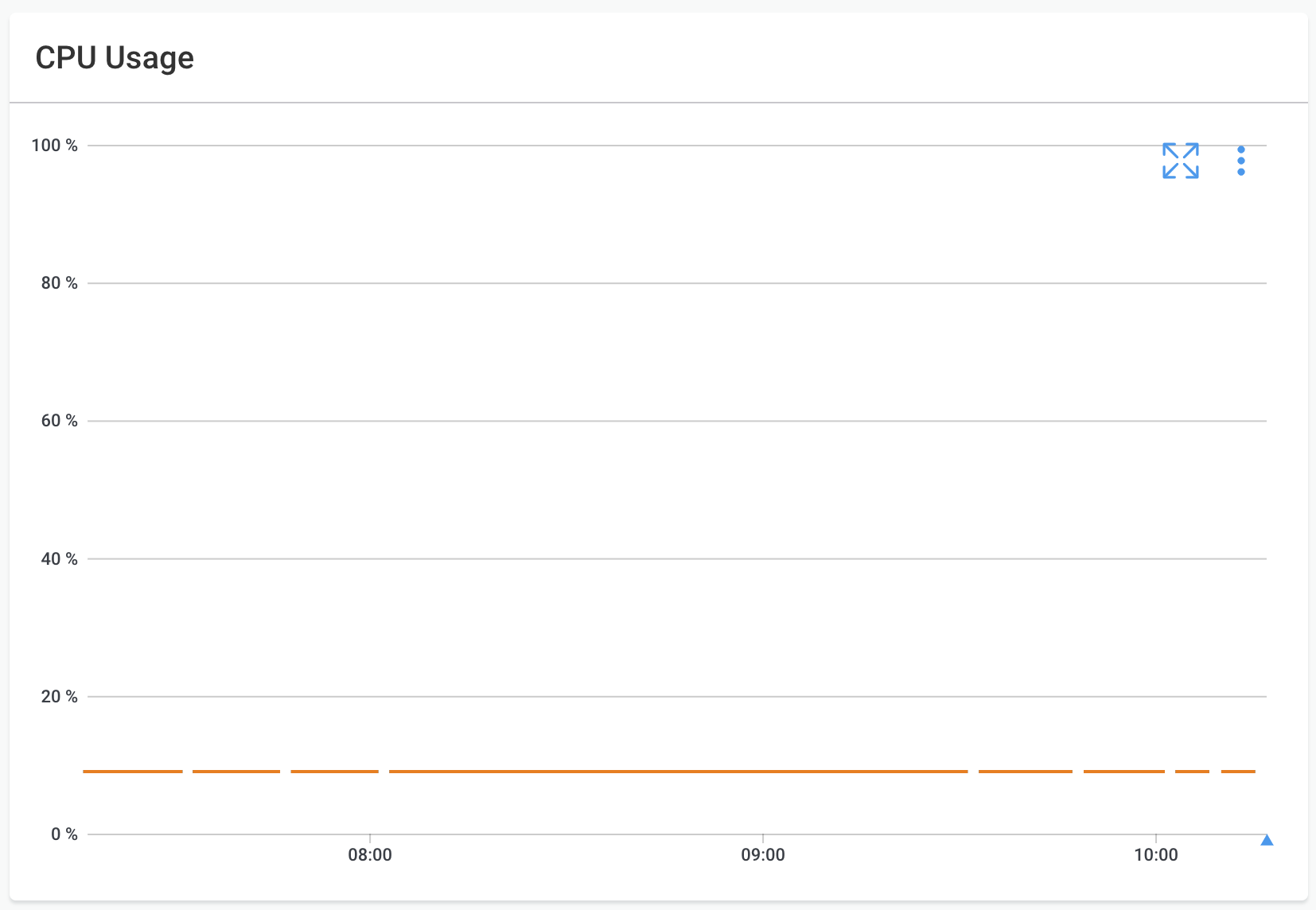
This happens when at least one device polling has taken more than 75% of the Collector Frequency during the time range selected on the page. If it happens only once in a while and there are no holes in the graphs, you can ignore this message. However, if it happens often and you start seeing holes in the graph like the one below, we recommend you increase the Collector Frequency setting for that device.
Why are only some devices affected?
We usually see this with devices with a high number of interfaces (such as a stack of switches) and a CPU with low-resources for management tasks such as SNMP. It can also be caused by a too aggressive control-plane policing or rate-limiting, which can sometimes be configured to allow more traffic in order to have a faster collection.
Inconsistent graphs or missing values
If a device's graphs are inconsistent or values are repeatedly missing, the Collector Agent may not receive all the SNMP responses before the next polling period starts. To fix it, increase the Device Polling Concurrency in the Advanced Parameters of the Agent Settings above its default value of 1.